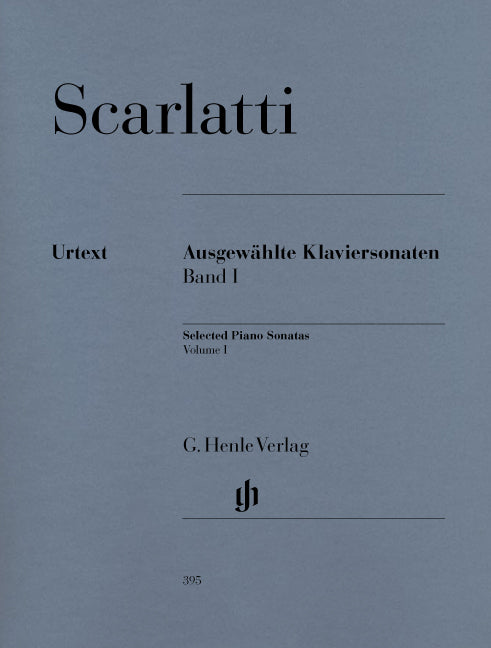
Description of Piano Sheet Music
Piano sheet music is a form of written notation used to represent music for the piano. It typically features both treble and bass clefs, corresponding to the higher and lower registers of the piano respectively. Each staff (the set of five lines and four spaces) represents a specific pitch and rhythm, guiding the performer in playing the correct notes and rhythms. The sheet includes various musical symbols such as:
-
Notes: Indicating pitch and duration.
-
Time Signatures: Denoting the number of beats per measure.
-
Key Signatures: Indicating the scale used in the piece.
-
Dynamics: Indicating volume (e.g., piano for soft, forte for loud).
-
Articulations: Such as staccato (short notes) or legato (smooth, connected notes).
For the piano, sheet music is written with two staves: one for the right hand (treble clef) and one for the left hand (bass clef). The notes on the staves correspond to the black and white keys of the piano.
History of Piano Sheet Music
The evolution of piano sheet music has gone hand in hand with the development of the piano itself and the broader tradition of Western classical music. Here is a brief overview of its history:
1. Early Beginnings (Pre-1600s)
Before the piano was invented, music was generally written for vocal performances or instruments like the organ or harpsichord. Early sheet music relied on neumes (early musical notation) to represent pitch and rhythm, but this was mainly used for Gregorian chant and other religious music. These early notations were far less specific than modern sheet music.
2. Birth of the Piano (1700s)
The piano was invented by Bartolomeo Cristofori around 1700, and it quickly became popular throughout Europe. The need for clear and specific notation grew as composers began to write for the instrument. Early music written for the piano, or its precursor instruments (like the harpsichord and clavichord), used staff notation, which had evolved from earlier forms of written music.
J.S. Bach and Wolfgang Amadeus Mozart are two notable composers from this time whose music for keyboard instruments began to shape what we recognize today as piano sheet music.
3. Classical Period (1750–1820)
By the Classical period, the piano had become a standard instrument in both private and public performance. The notation system had advanced, and composers such as Ludwig van Beethoven and Franz Joseph Haydn began composing complex works for the piano, including sonatas and concertos. This period also saw the rise of piano pedagogy, with music becoming more accessible to amateur pianists.
During this time, piano sheet music was hand-copied by musicians or printers, and publishing companies began to emerge, allowing for wider distribution of compositions.
4. Romantic Period (1800s)
The piano flourished during the Romantic period, with composers such as Frédéric Chopin, Johannes Brahms, and Franz Liszt creating more expressive and technically demanding works. Music notation became increasingly detailed with greater emphasis on dynamics, phrasing, and pedal marks. Sheet music printing became more sophisticated, allowing for more elaborate notation and higher-quality prints.
This period also saw the rise of piano solos as a prominent genre, with composers writing music to showcase both technical skill and emotional expression.
5. 20th Century and Beyond
In the 20th century, the piano continued to play a central role in Western music, with composers like Claude Debussy, Sergei Rachmaninoff, and Igor Stravinsky exploring new styles and techniques. The piano became increasingly popular in jazz and popular music, with ragtime, blues, and jazz incorporating distinct notational forms and structures.
As technology advanced, photographic printing and digital tools became important for sheet music production. Today, musicians can access piano sheet music through online platforms, and many apps allow for digital notations and playback, making learning more accessible.
In Summary
Piano sheet music has evolved significantly from its early forms, driven by the development of musical notation, the piano itself, and the demands of composers and performers. From the early days of hand-copying manuscripts to modern digital resources, sheet music has been an essential tool in preserving and sharing the art of piano music across generations.