
My Store
Beethoven Pno Sonata Amaj Op101 BA
Beethoven Pno Sonata Amaj Op101 BA
Low stock: 1 left
Couldn't load pickup availability
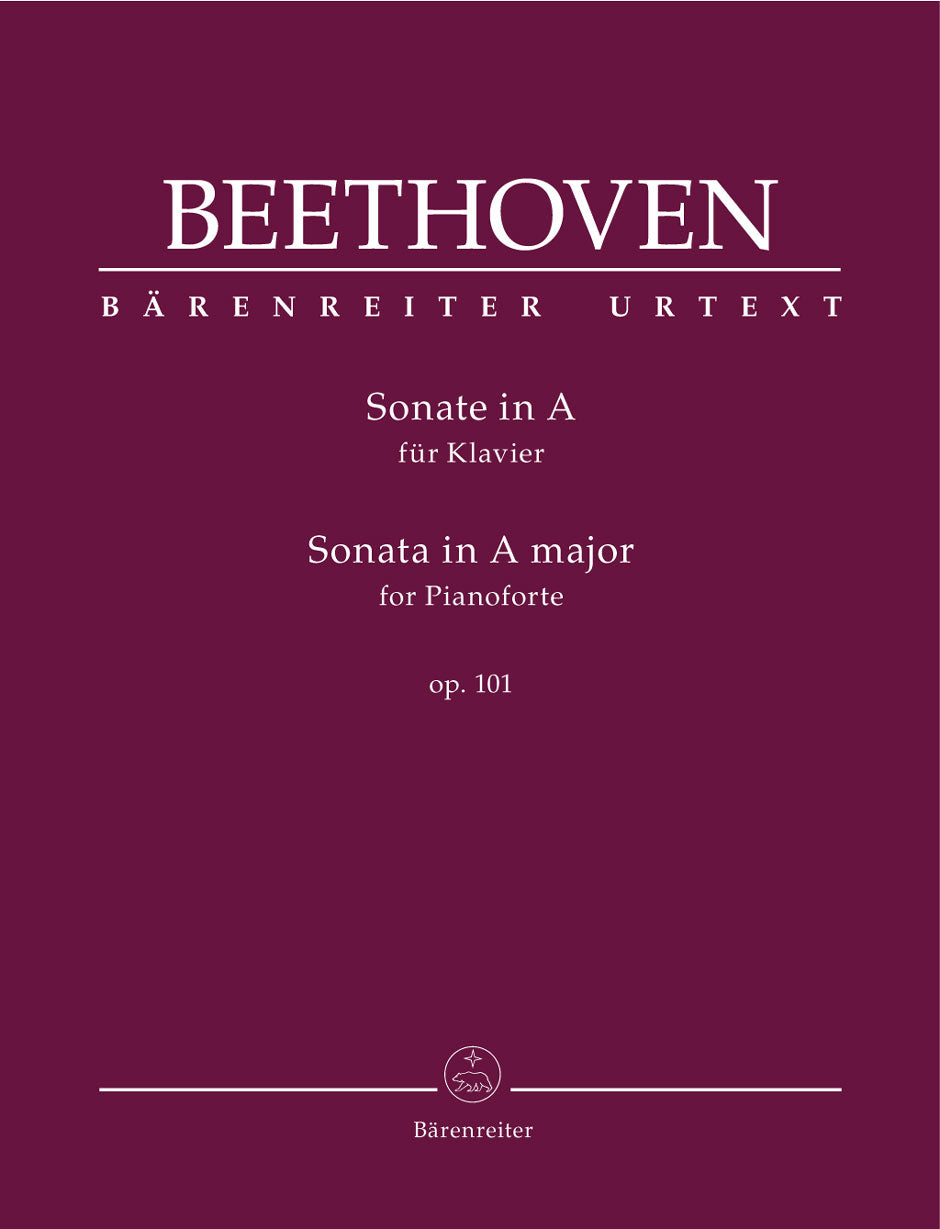
The sonata Op.101 had an unusually long gestation. Beethovens earliest sketches date from 1815. The first publication of the "difficult to execute Sonata in A, as the composer called it, appeared in 1817. Beethovens nationalistic feelings during this period led him to seek German substitutes for traditional Italian musical terminology. The autograph of Op.101 is inconsistent in this respect, the outer movements having markings in Italian, and the central march in German. The first edition uses both languages throughout as does this Brenreiter Urtext edition. In January of 1817 Beethoven informed his publisher that henceforth all his works should use Hammerklavier in place of Pianoforte. This instruction was carried out only in connection with Op.101 and Op.106, the latter bears the nickname of Hammerklavier to this day.
In this edition great care was given to a user-friendly layout which on the one hand was to reflect the flow and tempo of the music and on the other hand was to facilitate the study of this technically demanding work by a transparent and clear appearance on the page and good page turns.
Particularly enlightening in this edition is the Preface which includes information on idiosyncracies of Beethovens notation (Slurs, Punkte versus Striche) as well as on aspects of performance practice (Instruments, Pedalling, Tempo, Dynamics, Articulation, Accents, Ornaments, Repeats).
The acclaimed Beethoven specialist Jonathan Del Mar has consulted every known source for these critical Urtext performing editions. In addition he has analysed various copies of the prints published during Beethovens lifetime. The results of his accurate research are presented in a meticulously edited musical text at the cutting edge of scholarship, together with a detailed Critical Commentary.
The editions stand out in terms of their elegant and well-presented layout. Special emphasis has been placed on optimum page-turns and on the consideration of the flow of the music. The highly informative Introductions on the genesis and significance of the works are supplemented by valuable notes on historical performance practice.
- New critical performing editions at the cutting edge of scholarship
- Optimum page-turns
- Introductions with valuable notes on historical performance practice (Eng/Ger) and Critical Commentaries (Eng)
Piano Sonata in A major Op.101
Share